Cafe Interior Designers
Success in the restaurant business relies on a harmonious combination of high-quality cuisine, impeccable service, and a unique atmosphere. The interior of an establishment serves as the primary non-verbal communication channel with the guest. It conveys the brand's values, justifies the price point, and defines the target audience before the customer even glances at the menu. A qualified approach to space planning turns square meters into a working business asset. Visual components directly influence the psychological comfort of visitors and, consequently, the average check size. Investors and restaurateurs must view design not merely as decoration but as a marketing tool that shapes consumer behavior.
Operational Zoning and Ergonomics
The foundation of any successful project lies in the functionality of the layout. A visually stunning space will fail to generate profit if the logistics hinder staff performance or cause discomfort to guests. Ergonomics in public catering involves a precise calculation of flows. It is necessary to separate the paths of clean and dirty dishes, ensure unobstructed movement for waiters, and create comfortable zones for visitors. Every centimeter of the area must work efficiently.
Technical planning includes the arrangement of furniture, the width of aisles, and the configuration of the bar counter. The distance between tables determines the level of privacy and the capacity of the hall. Dense seating may be appropriate for a fast-food format or a dynamic coffee shop, whereas a fine dining restaurant requires distinct boundaries for each landing zone. Correct zoning prevents queues at the entrance and chaos near the kitchen station. A specialized cafe design company always begins work with a detailed analysis of these logistical chains to eliminate potential "bottlenecks" in service.
The Psychology of Light and Color
Lighting serves as one of the most powerful tools for influencing the guest's mood. It allows for the transformation of the atmosphere throughout the day. Bright, cool light in the morning stimulates activity and ensures rapid table turnover, which is beneficial for breakfast service. In the evening, warm, dimmed lighting creates intimacy, encouraging guests to stay longer and order dessert or wine.
Color solutions also dictate the emotional background. Warm shades stimulate appetite and conversation, while cool tones create a sense of freshness and spaciousness. Experienced cafe interior designers utilize color psychology to subtly manage guest perception. For instance, fast-food chains often employ red and yellow accents to accelerate the rhythm of consumption, while lounge zones prefer deep, complex shades to induce relaxation.
Acoustics and Microclimate
Visual perception represents only part of the guest experience. Acoustic comfort plays an equally significant role. A high noise level causes fatigue and forces visitors to leave the establishment prematurely. Hard surfaces such as glass, concrete, and ceramic reflect sound, creating an echo effect. To mitigate this, sound-absorbing materials are integrated into the design. Acoustic panels on the ceiling, upholstered furniture, heavy curtains, and decorative elements made of wood or cork dampen reverberation.
Ventilation and air conditioning systems must be integrated into the design project at the initial stage. Engineering communications often remain open in loft-style interiors or are masked by suspended ceiling structures. The task of the designer is to harmoniously inscribe grilles and air ducts into the visual concept without compromising the efficiency of air exchange. A comfortable temperature and the absence of kitchen odors in the dining hall are mandatory conditions for the success of a modern cafe.
The Economic Impact of Design
Investing in a high-quality interior yields a direct financial return. A unique design creates a recognizable brand image that works for marketing without additional advertising costs. Guests actively share photos of aesthetic interiors on social networks, attracting a new audience. This "viral" effect significantly reduces the cost of customer acquisition.
Furthermore, a well-thought-out environment justifies a higher margin on dishes. Customers are willing to pay more for the opportunity to spend time in a pleasant, stylish atmosphere. Design creates added value for the product. It helps the establishment stand out among competitors and forms an emotional connection with the visitor, turning them into a loyal customer.
A professional design project minimizes risks during the construction phase. Detailed drawings and specifications allow for an accurate calculation of the estimate and avoid unforeseen expenses. Strict adherence to the plan ensures the launch of the facility on time, which is critical for the return on investment. The interior becomes a long-term asset that generates profit and shapes the reputation of the restaurant business.
Marine style
Our design firm offers you a variety of design options for yourgo cafe. One of the most popular is the Interior in the marine style: "WithRed Sea luxury".
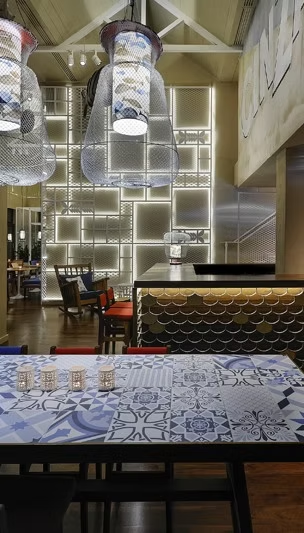
An example of such an interior can be seen in cafe the Mediterraneo Cafe. The choice of marine steeleye made was inspired by the story. The establishment is located in Cyprus, Limassol Marina. Since ancient times, the Mediterranean Sea was considered the center of the world: a place connecting East and West.
The main idea of the project quickly came to the mind of the authors, because Cyprus is washed on all sides by the waters of the Mediterranean Sea, and the pier goes directly to the port. The design goal was not just to appeal to this place, but to embody aesthetics in the interior as such.
The team was inspired by the whiteness of the Aegean Sea, Venetian and Islamic motifs, and the blue of the ocean depths. Especially in the design, natural beauty, water as an element and fishing are emphasized. Thus, it is not surprising that this interior is usually decorated with fishing nets or "fish scales".
The metal structure of the room artistically visualizes elements associated with the underwater world. The wooden part of the hull on the walls creates an image of a sunken ship, which gradually turns into a wholecity on the seabed.
If you want to implement the sea style in your cafe, then our design firm will help you!
Modern style
If you are interested in an Art Nouveau interior, we can offer a variant based on the example of the design Don of the Don Cafe House in Kosovo.
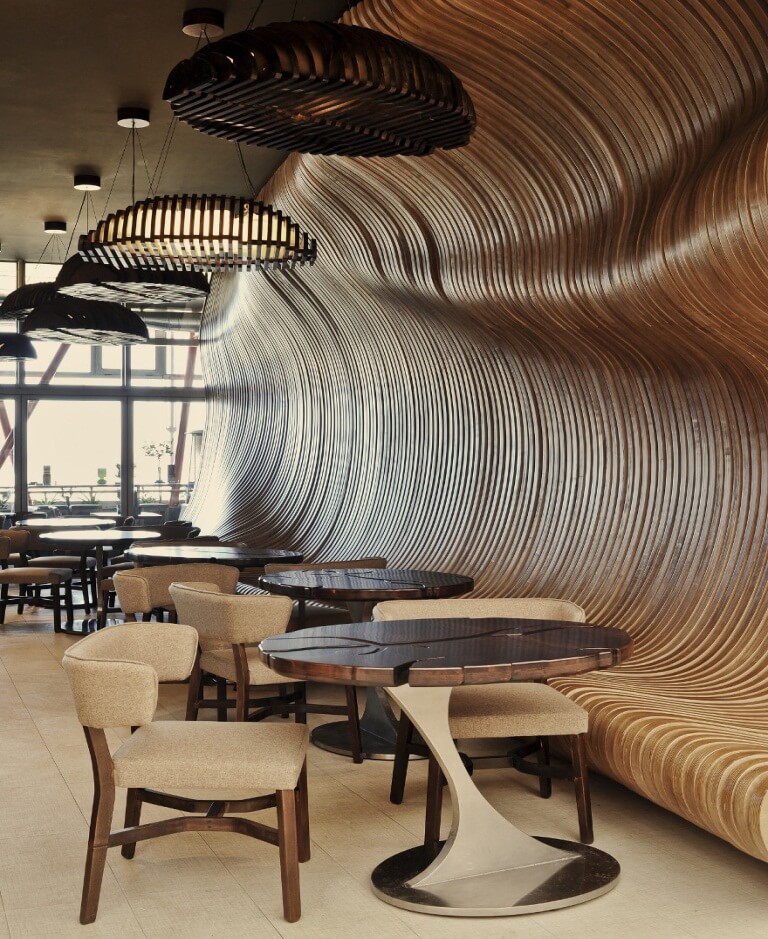
Designers created the concept of a modern cafe space, inspired by the image of bags filled with coffee beans. Columns have the texture of such bags. And the walls have an "organic" shape-they are decorated with wooden plates, which together create an unusual complex shape, also similar in color to coffee.
Tables and chandeliers are arranged randomly in the hall, which is also part of the overall idea – it symbolizes grains in a bag. In one part of the cafe, the walls merge smoothly into seating areas. This is a dominant and unique feature of the interior.
The tables in the middle of the hall are also shaped like coffee beans. A wood-paneled wall is located behind the bar, supporting the overall style of the interior.
Rural style
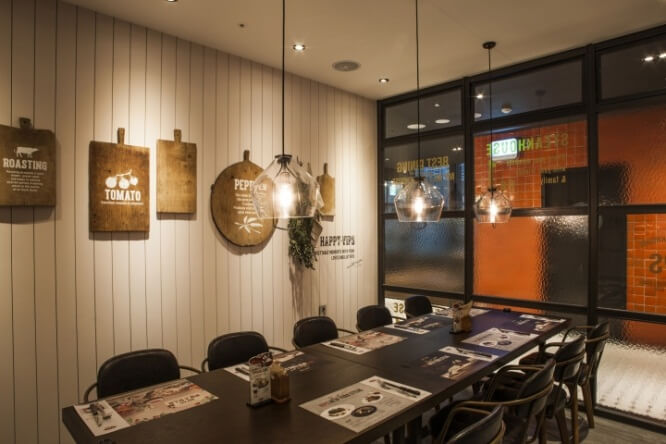
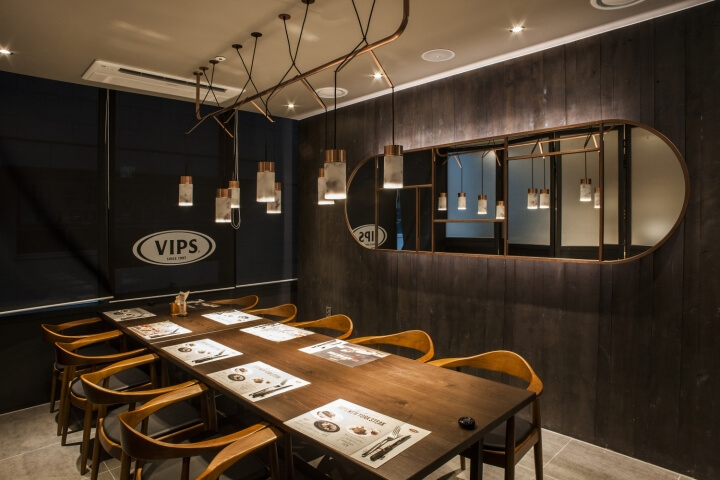
An example of such an interior can be found at VIPS Restaurant, located in Seoul, Korea. Description of the interior of the restaurant is best to start with the ceiling. It was on him that the designers of the architectural studio who were engaged in this project emphasized.
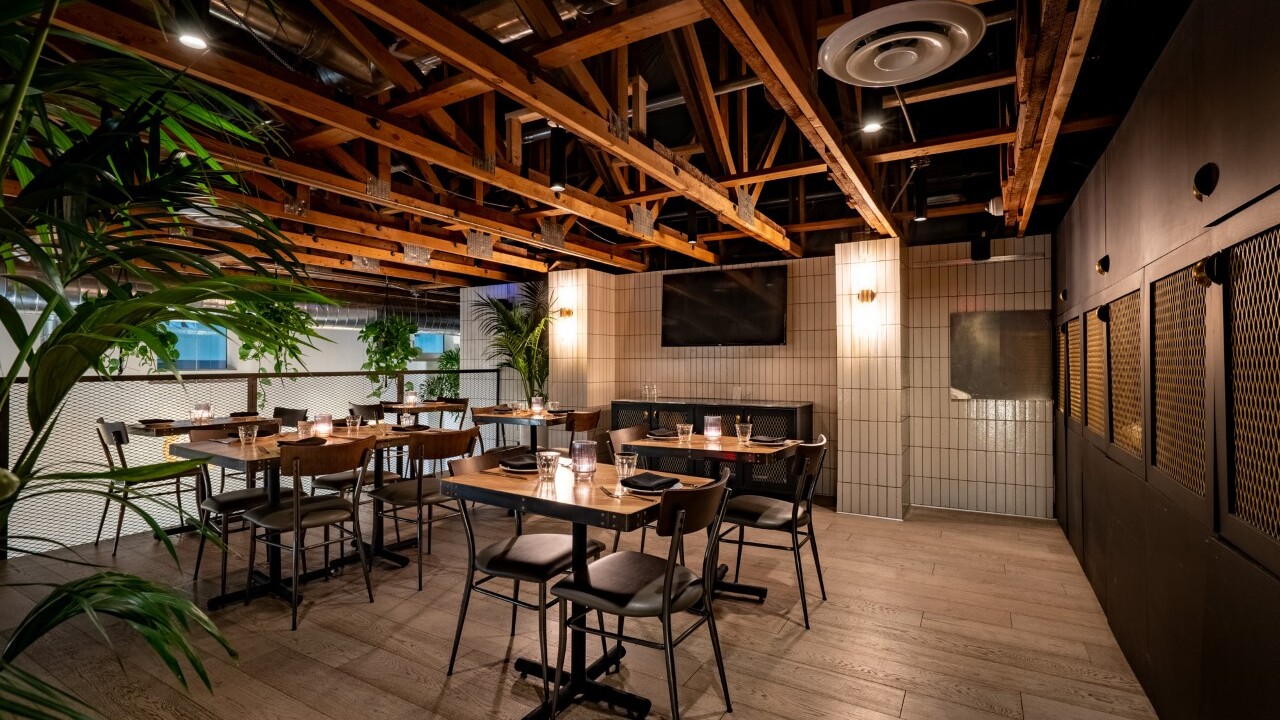
Dark finishes, open communication systems, numerous built-in and suspended lamps and powerful wooden beams in the form of triangles make the space more voluminous and free. The almost complete absence of decorative partitions and an open kitchen area create an atmosphere of warmth and unity between visitors and employees.
For a small company, there is a separate office with a long table and upholstered chairs. Simple, comfortable light-colored wooden furniture blends seamlessly with beige tile flooring. The walls are decorated with colorful photos of fresh food.
Not hidden behind blank walls, the kitchen allows visitors to watch the process of cooking culinary masterpieces. In addition, this solution contributes to the fact that every, even the most remote corner of the restaurant is filled with delicious flavors. Spotlights and simple light bulbs on long cords are used to illuminate the kitchen.
Wood paneling on the walls gives the place a certain resemblance to a large rustic barn turned into a food outlet. But this is not to say that it looks out of place. Such decor, on the contrary, gives the restaurant a certain charm and unique style.
If you want to implement a rural style in your cafe, then our design firm will help you!
From design through construction management, we provide integrated coordination across all stages of commercial projects. Our team manages planning, estimating, and execution to ensure efficient delivery and consistent results.
We assess commercial layouts to improve efficiency, functionality, and code compliance. Our team identifies design and operational constraints and delivers practical solutions that enhance space performance and usability.
We focus on meeting project schedules, maintaining cost control, and delivering consistent construction quality. Our approach is built on clear communication, accountability, and long-term client relationships.